What is Epigenetics?
Epigenetics is the study of heritable changes to the cells of our body that occur without altering the genetic code hardwired into our DNA.
How does the epigenetic system work?
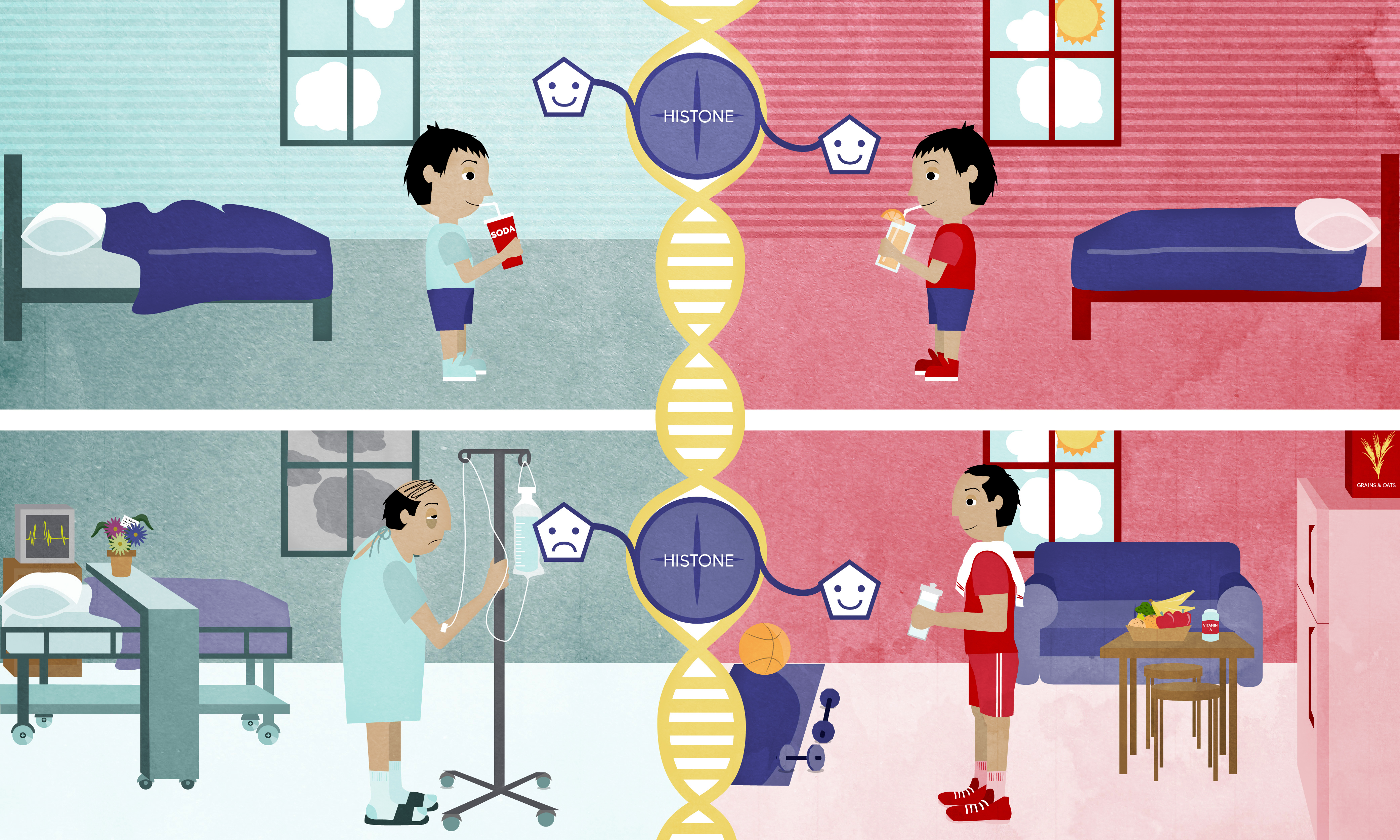
Our cellular epigenetic system is based on a chemical tagging process that indexes our packaged genome (DNA spooled around histones), differentially marking genes that should be turned on and those that should be shut down. At the heart of this epigenetic system are two groups of proteins – one group of proteins that act to introduce chemical tags as well as an antagonizing group of proteins that remove the chemical tags. The fact that any chemical tag put in place can also be removed makes the epigenetic system dynamic and reversible.
How do our cells make use of epigenetics?
Epigenetic tags are present in all of our cells where they act as a cellular memory to catalogue genes that should be expressed in different parts of the body. Throughout life, our cells undergo natural changes in the positioning of these epigenetic tags within the genome to allow for growth, development, and learning. At the same time, the positioning of epigenetic tags can also be influenced by environmental stresses, where the cell will epigenetically tag a new set of genes in an effort to adapt to its changing milieu. This adaptive response to stresses can sometimes lead to unfavorable changes in the positioning of epigenetic tags that contribute to disease and aging. Fortunately, epigenetic tagging of our genome is reversible and an ability to specifically remove these unfavorable epigenetic tags has the potential to improve health and quality of life for all of us.